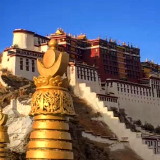
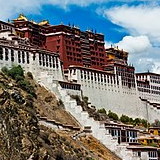
The Potala Palace is a famous cultural and historical landmark located in Lhasa, the capital of the Tibet Autonomous Region in China. It is a UNESCO World Heritage Site and has been described as one of the most iconic and impressive examples of Tibetan architecture and culture.
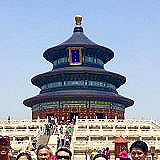
The Temple of Heaven is a complex of imperial Confucian religious architecture located southeast of central Beijing. The complex was once visited by the Ming Dynasty emperors and later restored by the Qing Dynasty to perform annual prayers for bountiful harvests and other seasonal rituals.
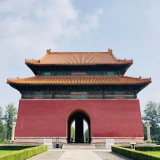
Xianling Tomb of the Ming Dynasty (tomb of Emperor Hongxi, the fourth emperor of the Ming Dynasty of China). The Ming tombs are a collection of mausoleums built by the emperors of the Ming dynasty of China.
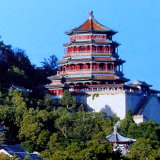
The Summer Palace is a beautiful imperial garden located in the Haidian district of Beijing, China. It was originally built in the 18th century as a summer retreat for the Qing Dynasty emperors and was later restored and expanded in the 19th century.
Tibet is an autonomous region located in the southwestern part of China covering much of the Tibetan Plateau spanning about 2,500,000 km2 (970,000 sq mi). The population of the region is 3,180,000 per estimates taken in 2014. Lhasa or Chengguan is a district and administrative capital of Lhasa City in the Tibet Autonomous Region of China.
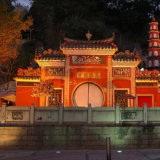
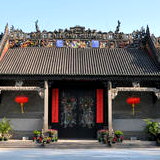
The A-Ma Temple, also known as the Ma Kok Miu, is a historic Taoist temple located in the southwestern part of the Macau Peninsula in Macau, China. The temple is dedicated to the Chinese sea goddess Mazu, who is also known as A-Ma or Tin Hau.
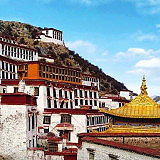
Ganden Monastery is a Tibetan Buddhist monastery located in the Lhatse County of the Shigatse Prefecture in the Tibet Autonomous Region of China. The monastery was founded in 1409 by Je Tsongkhapa, the founder of the Gelug school of Tibetan Buddhism.
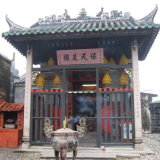
The Na Tcha Temple is a historic Taoist temple located in the Santo Antonio neighborhood of Macau, a special administrative region of China. The temple is dedicated to the worship of Na Tcha, a Chinese folk deity who is believed to protect against evil spirits and disease.
Senado Square, or Largo do Senado in Portuguese, is a historic public square located in the heart of Macau's city center. The square is a popular tourist destination and a symbol of Macau's rich cultural heritage. It covers an area of 3,700 square meters (4,425 square yards).
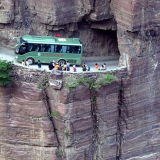
The Guoliang Tunnel is carved along the side of and through a mountain in China. The tunnel links the village of Guoliang to the outside through the Taihang Mountains which are situated in Huixian, Xinxiang, Henan Province of China. Guoliang Tunnel Road is one of the world's craziest roads.
The Great Wall of China is one of the world's most iconic landmarks and a UNESCO World Heritage Site. It is a series of fortifications made of stone, brick, tamped earth, wood, and other materials. The Great Wall of China is generally built along an east-to-west line across the historical northern borders of China.
The Forbidden City is a royal palace complex located in the heart of Imperial City, central Beijing, China. It served as the residence of 24 emperors of the Ming Dynasty until the end of the Qing Dynasty, and was the center of Chinese political power for over 500 years, from 1420 to 1924. Currently, the palace is managed by the Palace Museum.
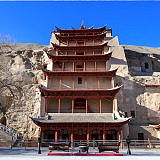
The Mogao Caves, also known as the Mogao Grottoes or the Caves of the Thousand Buddhas, are a renowned UNESCO World Heritage site located near the city of Dunhuang in Jiuquan, Gansu Province, China. These caves are famous for their exceptional Buddhist art and are one of the most significant archaeological and cultural treasures in China.
Beijing, also known as Peking, is the capital city of the People's Republic of China. It is located in the northern part of the country and is one of the most populous cities in the world, with a population of over 21 million people.
Sera Monastery is a Tibetan Buddhist monastery located in the northern suburbs of Lhasa, the capital city of the Tibet Autonomous Region of China. The monastery was founded in 1419 by Jamchen Chojey, a disciple of Je Tsongkhapa, the founder of the Gelug school of Tibetan Buddhism.
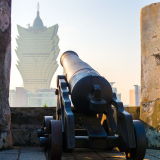
Monte Fort is a historical fortification located in Macau, a special administrative region of China. It was built by the Jesuits in the early 17th century as part of a complex of military defenses designed to protect the Portuguese colony from attacks by the Dutch and other European powers.
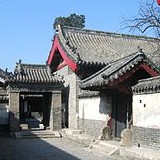
The Kong Family Mansion, also known as the Mansion of Confucius, is a historical and cultural site located in Qufu city, Shandong Province, China. It is the former residence of the direct descendants of Confucius, the great Chinese philosopher, and educator.
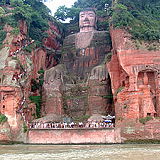
The Leshan Giant Buddha is a 71m tall stone statue, built between 713 and 803, depicting Maitreya. It is carved out of a cliff face that lies at the confluence of the Min River and Dadu River in the southern part of Sichuan province in China, near the city of Leshan.