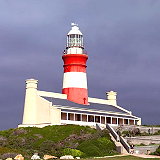
| Cape Agulhas | |
| Cape Agulhas is a rocky headland in the Western Cape province of South Africa. It is the southernmost point of South Africa, the geographically southernmost point of Africa, and the starting point of the traditional dividing line between the Atlantic and Indian Oceans according to the International Hydrographic Organization. A famous red and white lighthouse, still in operation, stands here, guiding ships. | |
| Cape of Good Hope | |
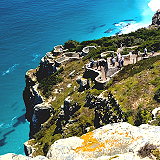
| The Cape of Good Hope is a rocky headland on the Atlantic coast of the Cape Peninsula in South Africa, about 50-70 km south of Cape Town. It is famous for its majestic cliffs, turbulent seas, and its important historical role in the European-Asian sea routes. Here you can find 1100 endemic plant species and 250 different bird species, as well as Cape mountain zebras, ostriches, antelopes, and turtles. | |
| Ihorombe | |
| Ihorombe is a region of Madagascar. Its population in 2018 was 418,520, and its capital is Ihosy. The region is rich in natural beauty and offers opportunities for adventure activities. It is known for its rugged landscapes with majestic rock formations and sparse vegetation. | |

| Meroe East Necropolis | |
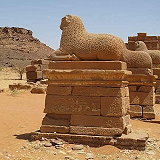
| The Meroë Pyramids are a large complex of Nubian pyramids, comprising three burial sites near the ancient city of Meroë. Dating from the late Kush Kingdom period (3rd century BC – 4th century AD), the Meroë Pyramids served as burial places for Kush kings, other members of the royal family, and important officials and dignitaries. | |
| Algerian Desert | |
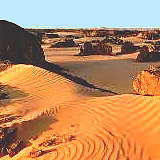
| The Algerian Desert is a desert located in central North Africa, within Algeria, and is part of the Sahara Desert. It covers more than 90% of Algeria's total land area. In 2018, it had a population of 3,600,000 people, representing 10.5% of Algeria's population. From the vibrant festivals of Djanet to the enchanting Timimoun oasis, the Algerian Desert offers many fascinating destinations to explore its wondrous landscapes. | |
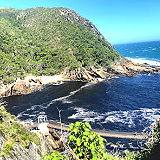
| Suspension Bridge | |
| The Storms River estuary suspension bridge is located in the Storms River estuary area of Tsitsikamma National Park, along the Garden Route in South Africa's Eastern Cape province. It is surrounded by spectacular coastal scenery, with majestic cliffs, lush forests, and the crashing waves of the Indian Ocean. | |
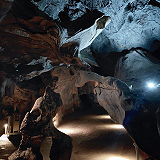
| Cango Caves | |
| The Cango Caves, located near the town of Oudtshoorn in South Africa's Western Cape province, are a prominent natural attraction known for their extensive network of chambers and limestone formations. The caves were discovered in the late 18th century by a local farmer. Formed from Precambrian limestone, the caves feature a variety of stalactites and stalagmites, including stalagmites, stalactites, and spiral stalactites. | |
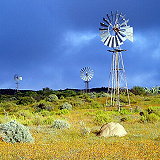
| Northern Cape | |
| The Northern Cape is the largest and least densely populated province in South Africa. Its highest elevation is 2,156 m (7,073 ft). The population was 1,355,629 in 2022. The Northern Cape boasts expansive skies, golden sand dunes, lush vineyards, two major rivers, and two ancient deserts, all blending together in a breathtaking landscape. | |
| Eastern Cape | |
| The Eastern Cape Province is one of the nine provinces of South Africa. The population in 2022 was 7,225,784. Its capital is Bhisho, and its largest city is Gqeberha. The Eastern Cape is incredibly diverse, ranging from ancient primary forests and expansive valleys to rugged coastal cliffs and an 800 km (497 mile) coastline stretching from Tsitsikamma to the subtropical Wild Coast. | |
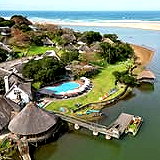
| Ribat of Sousse | |
| The Ribat of Sousse is a historical site located in the city of Sousse, Tunisia. It is a fortified monastery or fortress that dates back to the 9th century and is considered one of the best-preserved examples of Islamic military architecture in the Mediterranean region. | |
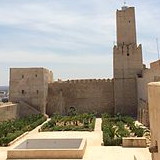
| Sidi Bou Said | |
| Sidi Bou Said is a town in northern Tunisia located about 20 km northeast from the capital, Tunis. The town itself is a tourist attraction and is known for its extensive use of blue and white. It can be reached by a TGM train, which runs from Tunis to La Marsa. Its population was 6,000 in 2023. | |
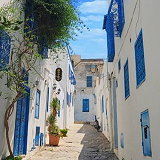
| Sbeitla | |
| Sbeitla is a small town in central-western Tunisia, 250km from Tunis. It is famous for its unique Roman ruins and the Capitol, which includes not one but three temples dedicated to Minerva, Jupiter, and Juno, the patron goddesses of Rome. | |
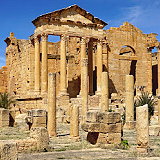
| Andasibe Mantadia National Park | |
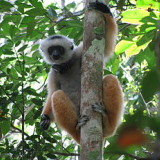
| Andasibe-Mantadia National Park is a 155 square kilometre protected area, located about 150 km east of Antananarivo. The park consists principally of primary growth forest in Alaotra-Mangoro Region in eastern Madagascar. | |
| Cape Town | |
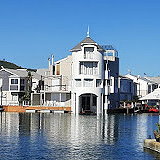
| Cape Town is the legislative capital of South Africa. It is the country's oldest city and home to the South African Parliament. Cape Town is the country's second-largest city by population, with 433,688 in 2011, after Johannesburg, and the largest city in the Western Cape province. Its highest elevation is 1,590.4 m (5,218 ft). | |

| Western Cape | |
| Western Cape is a province of South Africa, located on the southwestern coast of the country. It is the third most populous province, with 7,433,020 inhabitants in 2022. The highest elevation is 2,325 m (7,628 ft). The capital is Cape Town. The province stretches approximately 400 km (250 mi) north along the Atlantic coast and approximately 500 km (300 mi) east along the southern coast of South Africa (south of the Indian Ocean). | |
| Avenue of the Baobabs | |
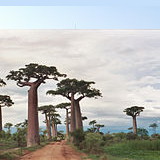
| The Avenue of Baobabs, or Baobab Alley, is a prominent cluster of Grandidier baobab trees. These baobab trees grow along the dirt road between Morondava and Belon'i Tsiribihina in the Menabe region of western Madagascar. | |
| Tsingy de Bemaraha National Park | |
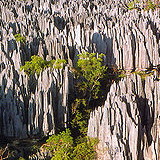
| Tsingy de Bemaraha National Park is a unique and spectacular conservation area located in western Madagascar. It is renowned for its distinctive limestone formations, rugged landscapes, and rich biodiversity. The national park focuses on two geological formations: the Greater Tsingy and the Lesser Tsingy. | |
| Isalo National Park | |
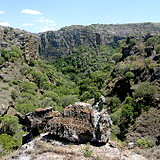
| Isalo National Park is a national park located in the Ihorombe region of Madagascar. It features a landscape of sandstone formations eroded by wind and water, creating rocky outcrops, plateaus, vast plains, and canyons up to 200 meters deep. | |
| Toliara | |
| Toliara is a city in southern Madagascar. It is the capital of the Atsimo-Andrefana region. The city had a population of 168,758 in 2018. As a port city, Toliara serves as a major import and export center for commodities such as sisal, soap, hemp, cotton, rice, and peanuts. | |

| Roman Ruins of Timgad | |
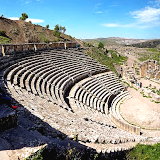
| The Roman ruins of Timgad are a notable archaeological site located near the modern town of Timgad in northeastern Algeria. Founded around 100 AD by Emperor Trajan, Timgad was originally a Roman colonial town designed to serve as a military settlement and a Roman cultural and administrative center in North Africa. | |