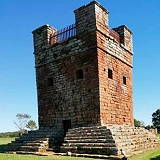
| San Ignacio Mini | |
| San Ignacio Mini was one of the many missions founded in 1610 in Argentina, by the Jesuits in what the colonial Spaniards called the Province of Paraguay of the Americas during the Spanish colonial period. | |

| La Grande Soufriere | |
| La Grande Soufriere is a volcano located on the island of Guadeloupe in the Caribbean. It is one of the most active volcanoes in the Lesser Antilles and has erupted several times in recorded history. The last major eruption occurred in 1976, and there have been smaller eruptions and seismic activity since then. | |
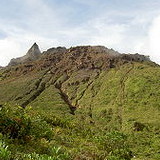
| Fort Delgres | |
| Fort Delgres is a historical fortification located on the island of Guadeloupe in the Caribbean. It is situated in the town of Basse-Terre on the southwestern coast of the island, overlooking the Caribbean Sea. The fort has stunning views of the island's volcano and the surrounding towns and oceans. | |
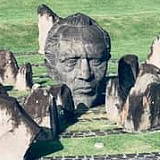
| Jardin Botanique de Deshaies | |
| The Jardin Botanique de Deshaies is a botanical garden located on the island of Guadeloupe in the Caribbean. It is situated in the town of Deshaies on the northwest coast of the island, and covers over 7 hectares of land. | |
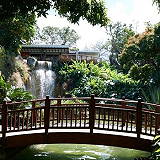
| Basse Terre | |
| Basse-Terre is a town and the administrative capital of the French overseas department of Guadeloupe, located in the Caribbean Sea. It is situated on the western side of the island of Guadeloupe, and is known for its rich history, natural beauty, and cultural offerings. It had a population of 9,861 in 2019. | |
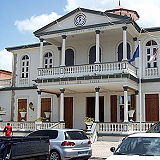
| Pointe des Chateaux | |
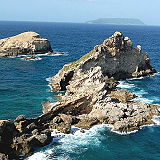
| Pointe des Chateaux is a scenic and prominent headland located on the easternmost tip of the island of Grande-Terre in Guadeloupe, a French overseas department in the Caribbean. It is known for its stunning landscapes, rocky cliffs, and panoramic views of the Atlantic Ocean. | |
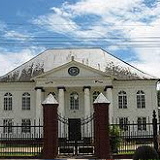
| Neveh Shalom Synagogue | |
| The Neveh Shalom Synagogue is a historical landmark located in Paramaribo, the capital city of Suriname. It is the oldest synagogue in South America and one of the most important Jewish cultural and religious sites in the region. | |
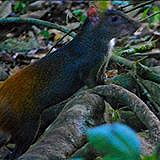
| Brownsberg Nature Park | |
| Brownsberg Nature Park is a protected area located in Suriname, a small country in South America. The park covers an area of approximately 13,000 hectares and is situated on the Brownsberg mountain, which rises to a height of 500 meters above sea level. | |
| Kasikasima | |
| Kasikasima is a mountain located in Suriname, which is a country located in South America. The mountain is part of the Kasikasima range, which is situated in the southern part of Suriname, near the border with Brazil. The area is known for its rich biodiversity and unique natural features, including waterfalls, rivers, and rainforests. | |
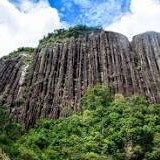
| Suriname | |
| Suriname is a small country located in South America, bordered by Guyana to the west, French Guiana to the east, Brazil to the south, and the Atlantic Ocean to the north. The country's capital and largest city is Paramaribo. | |
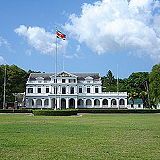
| Copacabana Beach | |
| Copacabana or “Copa” for the Cariocas, is the Princesinha do Mar (Little Princess of the Sea). It is a Carioca classic, the heart of the South Zone and a beach full of personality! Undoubtedly, it is also one of the most known beaches in the world. And it definitely deserved a post entirely dedicated to it. | |

| Gateway of the Citadel | |
| Puerta de la Ciudadela is located at the entrance of Ciudad Vieja adjacent to the Plaza Independencia in Montevideo Uruguay. It was built in 1742 and was the original fortification of the old city. The construction of the fortification took over 40 years. | |

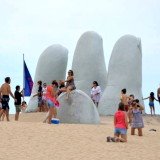
| La Mano de Punta del Este | |
| La Mano, also known as "Los Dedos" (The Fingers) or "Monumento al Ahogado" (Monument to the Drowned), is a famous sculpture located in Punta del Este, a resort town in southeastern Uruguay. The sculpture was created by Chilean artist Mario Irarrázabal and was installed on the beach in 1982. | |
| Santa Teresa National Park | |
| On the coast of the Atlantic Ocean in Rocha, Uruguay, is the Santa Teresa National Park, between the spas of Punta del Diablo and La Coronilla. It is an immense park of 3000 hectares of extension, of which 1400 are covered with forest, populated with more than 2 million exotic and native trees. A place where history and nature merge to offer an unforgettable walk. | |

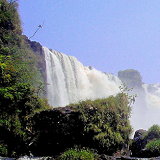
| Saltos del Monday | |
| Saltos del Monday is a waterfall located in the city of Presidente Franco, in the Alto Parana department of Paraguay. The waterfall is located approximately 8 kilometers from the city center and is a popular tourist attraction in the region. The waterfall has a height of approximately 40 meters and is surrounded by lush vegetation and wildlife. | |
| Paseo La Galería | |
| Paseo La Galería is a shopping center located in Asuncion, Paraguay. It includes 120 of the best national and international brands distributed over 3 levels. The best gastronomic options in a unique atmosphere make Terrazas the new meeting point in Asunción. | |

| Monday Falls | |
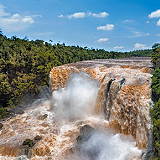
| The Municipal Park Monday and its main attraction - approximately 45 m (148 ft) tall and 120 m (390 ft) wide waterfall named Saltos del Monday - are located in the Presidente Franco District, Alto Parana Department, Paraguay. | |
| National Pantheon of Heroes | |
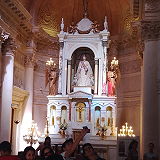
| The National Pantheon of the Heroes is a building and landmark of Asuncion, Paraguay, and a national monument of Paraguay.The National Pantheon of Heroes and oratory of the Virgin Our Lady Saint Mary of the Asuncion which is located between Palma and Chile streets in the downtown of the capital of Paraguay. | |
| Ruins of Jesus de Tavarangue | |
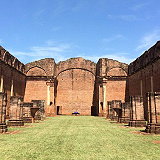
| The Ruins of Jesus de Tavarangue are a set of well-preserved ruins located in Paraguay, near the city of Encarnacion. These ruins are the remains of a Jesuit mission that was established in the mid-17th century, with construction starting in 1685 and continuing until 1760. | |
| Mision Jesuitica Trinidad | |
| Mision Jesuitica de la Santisima Trinidad is the name of a former Jesuit reduction in Paraguay. It is an example of one of the many Jesuit reductions, small colonies established by the missionaries in various locations in South America. | |