| Serapeum | |
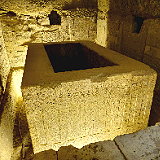
| The Serapeum at Saqqara is an ancient Egyptian burial site dedicated to the sacred bulls of the Apist sect of Memphis. These bulls were believed to be the embodiment of the god Ptah, who would become immortal after death under the name Osiris-Apis. The tomb was used from the time of Amenhotep III of the New Kingdom until the Ptolemaic period. | |
| Edfu Temple | |
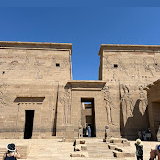
| The Edfu Temple, also known as the Temple of Horus, is one of the best-preserved and most significant ancient temples in Egypt. Located in the city of Edfu in the Aswan Governorate, the temple is dedicated to Horus, the falcon-headed god of the sky and kingship. | |
| Nabatieh Governorate | |
| Nabatieh Province is one of Lebanon's nine provinces. Its capital is Nabatieh City. The population in 2017 was 383,839. Nabatieh is renowned for its historical sites, rich cultural heritage, and natural beauty, including Neolithic and Phoenician sites, and is home to Beaufort Castle, an iconic medieval fortress. | |
| Kızılkoyun Roman Tombs | |
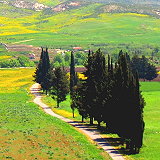
| The Kızılkoyun Roman Tombs (Kızılkoyun Nekropolü) in Şanlıurfa, Türkiye, is an important archaeological site dating from the Roman period, specifically from the 2nd to the 4th centuries AD. The necropolis comprises between 75 and 103 tombs carved into the rock face and decorated with reliefs, sculptures, and even door mechanisms. | |

| Sanlıurfa Archaeology Museum | |
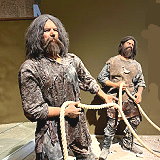
| The Sanlıurfa Archaeological Museum is located in the city of Şanlıurfa in southeastern Türkiye. The museum is currently displaying around 10,000 artifacts. Visitors to the museum will have the opportunity to admire the world's oldest statue, a replica of the Göbeklitepe D temple, the original Nevali Çori temple, numerous historical cartoons, cartoons about the Prophet Abraham... | |
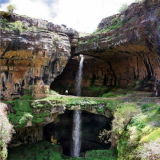
| Baatara Gorge Waterfall | |
| Baatara Gorge Waterfall, also known as the Three Bridges Waterfall, is a stunning natural wonder located in the village of Meghraq, Lebanon. The Baatara Gorge Waterfall is formed by a series of limestone caves and a sinkhole. Water cascades down through a vertical fissure, creating a spectacular waterfall plunging into the gorge below. | |
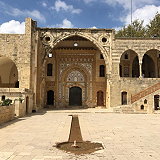
| Beiteddine Palace | |
| Beiteddine Palace is a historical and architectural gem located in the town of Beited-Dine, in Lebanon's Chouf Mountains. Built in the early 19th century, the palace is an extraordinary example of Lebanese architecture, blending Italian, Arabic, and Ottoman styles. The exquisite stone carvings, mosaic floors, vaulted ceilings, and beautifully landscaped courtyards are testaments to the craftsmanship and splendor of that era. | |
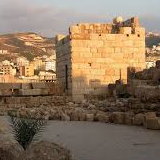
| Byblos Citadel | |
| Byblos Castle is a Crusader castle in Byblos, Lebanon. During the Crusades, it was known as Gibelet Castle, or Giblet, and belonged to the Genoese Embriaco family, lords of the city. The castle is located adjacent to the Phoenician archaeological site, which includes the ruins of the Baalat Gebal Temple and the Obelisk Temple. | |
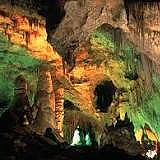
| Jeita Grotto | |
| The Jeita Caves are a stunning natural wonder located in Keserwan, near Beirut, Lebanon. The Jeita Caves are a system of interconnected limestone caves and underground rivers, nestled in the picturesque Nahr al-Kalb valley. It is divided into two main parts: the upper cave, known as Jeita I, and the lower cave, Jeita II. | |
| Hamatoura Monastery | |
| North of the village of Kousba lies the Hamatoru Monastery, built into a rock niche in a high cliff overlooking the sacred Kadisha Valley. Hamatoru is 84km from Beirut. The Church of St. Jacob is the oldest part of the monastery, dating from the 4th century, while a large 7th-century cross rises above the exterior entrance. | |
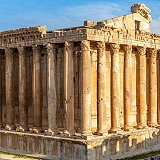
| Temple of Bacchus | |
| The Temple of Bacchus in Baalbek is one of the best-preserved ancient Roman temples in the world, and it is dedicated to Bacchus, the god of wine, revelry, and exhilaration. Built in the 2nd century AD, this temple is often overshadowed by the larger Temple of Jupiter nearby, but it stands out for its exquisite craftsmanship and architecture. | |
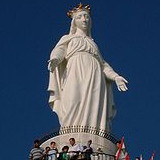
| Our Lady of Lebanon | |
| The Shrine of Our Lady of Lebanon is a Marian shrine and pilgrimage site in Lebanon. The shrine belongs to the Maronite Patriarchate, which has entrusted its administration to the Maronite Missions of Lebanon since its founding in 1904. It is one of the most important shrines in the world honoring the Virgin Mary, the Mother of Jesus. | |
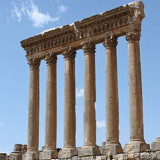
| Temple of Jupiter | |
| The Temple of Jupiter was a colossal Roman temple, the largest in the entire Roman Empire, located within the Baalbek complex in Heliopolis, Syriaca (now Lebanon). The temple served as a prophetic site and was dedicated to Jupiter, Heliopolitanus. It was the largest temple dedicated to Jupiter in the entire Roman Empire. | |
| Baalbek | |
| Baalbek is a city in eastern Lebanon, renowned for its impressive archaeological site filled with ancient ruins, particularly its magnificent Roman temples. Situated in the fertile Beqaa Valley, Baalbek was once a major city in antiquity and is home to one of the largest and best-preserved Roman temple complexes in the world. Its population was 82,608. | |
| Baalbek Temple | |
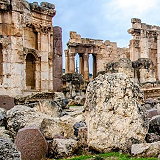
| The Baalbek temple complex, located in Baalbek, Lebanon, is one of the most impressive and mysterious Roman and pre-Roman architectural monuments in the world. Baalbek was an important center for the worship of Roman gods, particularly Jupiter, Venus, and Bacchus. Its massive scale, exquisite carvings, and masterful construction techniques continue to attract admiration and fascination. | |
| Temple of Venus | |
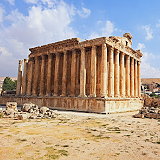
| The Temple of Venus in Baalbek, Lebanon, is a stunning Roman monument located within the ancient Baalbek archaeological site, renowned for its magnificent architectural wonders. The temple reflects the skill and artistic taste of Roman architects and holds a significant place in the cultural and religious history of the region. | |
| Sidon | |
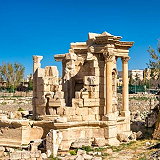
| Sidon is the third largest city in Lebanon. Located on the Mediterranean coast in the Southern Province, it is the provincial capital. Sidon has a population of approximately 80,000 within its city limits. Sidon I, II, and III are prehistoric sites, with Sidon I being an archaeological mound of ancient Sidon dating from the early Bronze Age. | |

| Lighthouse of Alexandria | |
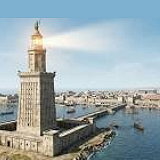
| The Lighthouse of Alexandria was a lighthouse built by the Ptolemaic Kingdom of ancient Egypt on the Egyptian island of Pharos, during the reign of Ptolemy II Philadelphus (280–247 BC). It is estimated that it was at least 100 meters (330 ft) tall. | |
| Pasargadae | |
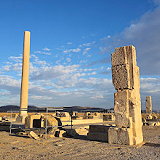
| Pasargadae was the capital of the Achaemenid Empire under Cyrus the Great (559-530 BC), who ordered its construction. Today it is an archaeological site located just north of the town of Madar-e-Soleyman and about 90 kilometres (56 mi) to the northeast of the modern city of Shiraz. A limestone tomb there is believed to be that of Cyrus the Great. | |
| Chahkooh Canyon | |
| Chahkooh Gorge, also known as Chahkooh Valley or Tangeh Chahkooh, is a stunning geological wonder on the island of Qeshm in the Persian Gulf, Hormozgan province, southern Iran. Often referred to as one of the "seven wonders" of Qeshm, this majestic gorge showcases the artistry of nature through millennia of erosion. | |
