The Great Wall of China is one of the world's most iconic landmarks and a UNESCO World Heritage Site. It is a series of fortifications made of stone, brick, tamped earth, wood, and other materials. The Great Wall of China is generally built along an east-to-west line across the historical northern borders of China.
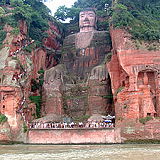
The Leshan Giant Buddha is a 71m tall stone statue, built between 713 and 803, depicting Maitreya. It is carved out of a cliff face that lies at the confluence of the Min River and Dadu River in the southern part of Sichuan province in China, near the city of Leshan.
The Forbidden City is a royal palace complex located in the heart of Imperial City, central Beijing, China. It served as the residence of 24 emperors of the Ming Dynasty until the end of the Qing Dynasty, and was the center of Chinese political power for over 500 years, from 1420 to 1924. Currently, the palace is managed by the Palace Museum.
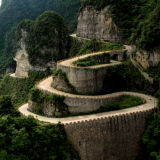
Tianmen Mountain National Park is located in Zhangjiajie, the northwestern part of Hunan Province, China. Tianmen Mountain Road - At just under 6.2 miles in length, the route boasts a total of 99 turns and 3,937 feet in elevation gain.
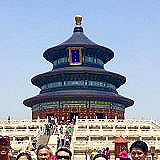
The Temple of Heaven is a complex of imperial Confucian religious architecture located southeast of central Beijing. The complex was once visited by the Ming Dynasty emperors and later restored by the Qing Dynasty to perform annual prayers for bountiful harvests and other seasonal rituals.
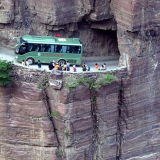
The Guoliang Tunnel is carved along the side of and through a mountain in China. The tunnel links the village of Guoliang to the outside through the Taihang Mountains which are situated in Huixian, Xinxiang, Henan Province of China. Guoliang Tunnel Road is one of the world's craziest roads.
Beijing, also known as Peking, is the capital city of the People's Republic of China. It is located in the northern part of the country and is one of the most populous cities in the world, with a population of over 21 million people.
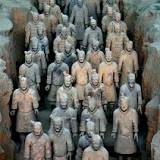
Emperor Qin Shi Huang's Mausoleum Site Museum, also known as the Terracotta Army Museum, is a significant archaeological site located in the Lintong District of Xi'an, Shaanxi Province, China. The Terracotta Army or the "Terracotta Warriors and Horses" is a collection of terracotta sculptures depicting the armies of Qin Shi Huang, the first Emperor of China.
The Hanging Temple, also Hengshan Hanging Temple was built on the cliffs of Mt. Hengshan, in Hunyuan County, Datong City, Shanxi province. Mt. Hengshan is one of the five most scared mountains in China. The very unique temple is the combination of three religions of Confucianism, Taoism and Buddhism. About 1/3 of building body is hanging on the cliff, with its halls connected by winding corridors and bridges.
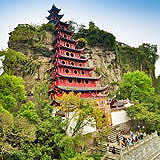
Shibaozhai Pagoda is a notable and unique architectural structure located in Zhongxian County, which is now part of Chongqing Municipality in southwestern China. The pagoda is known for its stunning location along the Yangtze River and its distinctive design, as it appears to be a wooden pagoda built into the side of a sheer rock hill.
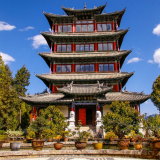
The Old Town of Lijiang, located in the Gucheng District of Lijiang City, Yunnan Province, China, is a UNESCO World Heritage-listed historic town renowned for its well-preserved ancient architecture, cobblestone streets, and unique cultural heritage.
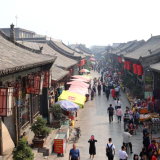
Pingyao, officially Pingyao Ancient City, is a walled city (about 2km across) in central Shanxi, China, famed for its importance in Chinese economic history and for its well-preserved Ming and Qing urban planning and architecture.
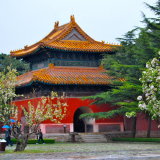
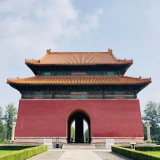
Xianling Tomb of the Ming Dynasty (tomb of Emperor Hongxi, the fourth emperor of the Ming Dynasty of China). The Ming tombs are a collection of mausoleums built by the emperors of the Ming dynasty of China.
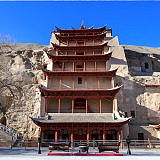
The Mogao Caves, also known as the Mogao Grottoes or the Caves of the Thousand Buddhas, are a renowned UNESCO World Heritage site located near the city of Dunhuang in Jiuquan, Gansu Province, China. These caves are famous for their exceptional Buddhist art and are one of the most significant archaeological and cultural treasures in China.
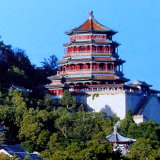
The Summer Palace is a beautiful imperial garden located in the Haidian district of Beijing, China. It was originally built in the 18th century as a summer retreat for the Qing Dynasty emperors and was later restored and expanded in the 19th century.