K2, at 8,611 metres (28,251 ft) above sea level, is the second-highest mountain on Earth, after Mount Everest at 8,849 metres (29,032 ft). It lies in the Karakoram range, partially in the Gilgit-Baltistan region of Pakistan-administered Kashmir and partially in the China-administered Trans-Karakoram Tract in the Taxkorgan Tajik Autonomous County of Xinjiang.
The Amazon River, located in South America, is renowned for being the largest river by discharge volume of water in the world. It discharges about 215,000–230,000 cubic meters per second, which is approximately 6,591–7,570 cubic kilometers per year. This volume is more than the next seven largest independent rivers combined and accounts for about 20% of the global riverine discharge into oceans.
Antarctica is the southernmost continent on Earth, situated almost entirely within the Antarctic Circle. It's the fifth-largest continent by land area, covering approximately 14 million square kilometers (5.4 million square miles), making it larger than Europe and almost twice the size of Australia.
The Rio Grande, known as the Río Bravo in Mexico, is one of North America's most significant rivers, extending approximately 1,900 miles (3,060 kilometers) from its source in the Rocky Mountains of Colorado to its mouth at the Gulf of Mexico. It serves as a vital water source for millions and forms a natural border between the United States and Mexico, particularly between Texas and several Mexican states including Chihuahua and Coahuila.
Mount Everest is the tallest mountain on Earth, with its summit reaching an elevation of 8,848.86 meters (29,031.7 feet) above sea level. It is located in the Himalayas on the border between Nepal and the Tibet Autonomous Region of China.
Mt. Lhotse is connected to Everest via the South Col and is the fourth highest mountain in the world. The main summit is 8,516 m while Lhotse Middle (East) is 8,414 metres and Lhotse Shar is 8,383 metres. Very often, climbers making an attempt on Everest, go up the Lhotse to acclimatize.
The Mozambique Channel is an arm of the Indian Ocean located between the Southeast African countries of Madagascar and Mozambique. The channel is about 1,700 km (900 nmi; 1,100 mi) long and 419 km (226 nmi; 260 mi) across at its narrowest point, and reaches a depth of 3,292 m (10,801 ft) about 230 km (124 nmi; 143 mi) off the coast of Mozambique.
Lake Erie is the fourth-largest of the five Great Lakes of North America by surface area and the smallest by volume. It borders four U.S. states—Ohio, Pennsylvania, New York, and Michigan—and the Canadian province of Ontario.
The Arabian Desert is a vast desert region that spans much of the Arabian Peninsula. The Arabian Desert covers parts of Saudi Arabia, Oman, Jordan, Iraq, Qatar, the United Arab Emirates, Kuwait, and Yemen. The desert features diverse landscapes, including vast sand dunes, gravel plains, rocky plateaus, and occasional mountain ranges.
The Arctic Desert, also known as the Arctic Tundra, is a cold, desolate region that encircles the North Pole, encompassing parts of Alaska, Canada, Greenland, Iceland, Norway, Sweden, Finland, and Russia. The Arctic Desert experiences extremely cold temperatures, often dropping below -40°C (-40°F) in winter. Summers are short and cool, with average temperatures ranging from 3°C to 12°C (37°F to 54°F).
The Amazon River Basin is home to the largest rainforest on Earth. The basin -- roughly the size of the forty-eight contiguous United States -- covers some 40 percent of the South American continent and includes parts of eight South American countries: Brazil, Bolivia, Peru, Ecuador, Colombia, Venezuela, Guyana, and Suriname, as well as French Guiana, a department of France.
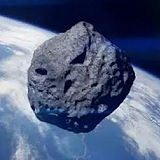
101955 Bennu is a carbonaceous asteroid in the Apollo group discovered by the LINEAR Project on 11 September 1999. It is a potentially hazardous object that is listed on the Sentry Risk Table and has the highest cumulative rating on the Palermo Technical Impact Hazard Scale. Bennu has a 1 in nearly 1,800 chance to hit Earth in the next 300 years.
With the longest shoreline of all of the Great Lakes, Lake Huron is one of the most unique lakes on Earth. It is the second largest of the Great Lakes, and the fourth largest lake in the world by surface area. Huron is renowned for its beaches, sand dunes, wetlands, forests, and extensive river systems.
The River Rhône is one of the major rivers of Europe. It rises in the Swiss Alps, passes through Lake Geneva and then runs through south eastern France. At Arles, near its mouth on the Mediterranean Sea, the river divides into two branches, known as the Grand Rhône and the Petit Rhône. The resulting delta constitutes the Camargue region.
A mosaic of rivers, forests, savannas, swamps and flooded forests, the Congo Basin is teeming with life. Gorillas, elephants and buffalo all call the region home. The Congo Basin spans across six countries—Cameroon, Central African Republic, Democratic Republic of the Congo, Republic of the Congo, Equatorial Guinea and Gabon.
The Strait of Malacca is a critical and strategic maritime passage that lies between the Malay Peninsula (Peninsular Malaysia) and the Indonesian island of Sumatra. The strait extends approximately 890 kilometers (550 miles) from the Andaman Sea to the South China Sea, narrowing down to about 2.8 kilometers (1.7 miles) at its narrowest point near Singapore.
The Atlantic Ocean is the second-largest ocean in the world, covering approximately 106.5 million square kilometers (41.1 million square miles). It separates the continents of Europe and Africa to the east from North and South America to the west. The deepest point in the Atlantic Ocean is the Milwaukee Deep in the Puerto Rico Trench, which reaches a depth of about 8,376 meters (27,480 feet).
The Kalahari Desert is a large semi-arid sandy savanna in Southern Africa extending for 900,000 square kilometres (350,000 sq mi), covering much of Botswana, as well as parts of Namibia and South Africa. The Kalahari Desert is not a desert in the strictest sense of the word. It receives too much rainfall - between 5 and 10 inches annually.
The Great Lakes are a group of five large freshwater lakes located in North America on the border between the United States and Canada. They are the largest group of freshwater lakes by total area in the world and hold about 21% of the world's surface fresh water.
The Caribbean is a region of the Americas that consists of the Caribbean Sea, its islands, and the surrounding coasts. It's known for its stunning beaches, vibrant culture, and diverse history. Tourism is a major industry in the Caribbean, attracting millions of visitors each year to its beautiful beaches, clear waters for diving and snorkeling, and historical sites.
The Iguazu River is a significant waterway in South America. The Iguazu River flows through Brazil and Argentina. It forms part of the boundary between the two countries. The river is approximately 1,320 kilometers (820 miles) long. It originates near the city of Curitiba in the Brazilian state of Paraná and flows westward, eventually joining the Paraná River.
Oceania is a geographic region that includes Australasia, Melanesia, Micronesia, and Polynesia. Spanning the eastern and western hemispheres, it comprises numerous islands in the Pacific Ocean, including the continent of Australia. Oceania is a diverse and fascinating region, offering a blend of unique cultures, stunning natural environments, and complex histories.
Lake Superior is the largest freshwater lake in the world by surface area. It is the world's third-largest freshwater lake by volume and contains nearly 10% of the word’s fresh surface water. Lake Superior is relatively young, approximately 10,000 years old dating back to the last glacial retreat. The Lake Superior watershed includes the surrounding areas of Ontario, Minnesota, Wisconsin and Michigan.
The Timor Sea is a relatively shallow sea located in the region of Southeast Asia, forming part of the Indian Ocean. It lies between the northern coast of Australia, the island of Timor (part of Indonesia and East Timor), and the Arafura Sea to the east. Here are key features and facts about the Timor Sea:
The universe is all of space and time and their contents. It comprises all of existence, any fundamental interaction, physical process and physical constant, and therefore all forms of matter and energy, and the structures they form, from sub-atomic particles to entire galactic filaments.
North America is a diverse continent that spans from the Arctic in the north to tropical regions in the south. The region includes the Bahamas, Bermuda, Canada, the Caribbean, Central America, Clipperton Island, Greenland, Mexico, Saint Pierre and Miquelon, the Turks and Caicos Islands, and the United States. The population is around 600 million people as of recent estimates.
Mt.Makalu is 20 km east of Everest in the Khumbu region and is the fifth highest moutain in the world. The mountain lies in the Makalu Barun National Park and is known for its perfect pyramid shape with four sharp ridges.
Shkodra Lake, also known as Lake Scutari, Lake Shkodër, or Skadar Lake, is the largest lake in Southern Europe. It straddles the border between Albania and Montenegro, offering stunning natural beauty and a unique ecosystem.
Lying between mainland China and the Korean peninsula, the Yellow Sea is one of the world's largest areas of continental shelf covered in shallow water, providing for rich fishing grounds and an important site for migratory birds. But decades of pollution is turning the sea to a colour other than yellow.
Lake Ontario is one of the five Great Lakes of North America and the easternmost of the group. Lake Ontario is bordered by the province of Ontario in Canada to the north, west, and southwest, and the state of New York in the United States to the south and east. It is the smallest of the Great Lakes by surface area but has significant depth.
The Luzon Strait is the strait between Taiwan and Luzon, the northern portion of the Philippine archipelago. The strait thereby connects the Philippine Sea to the South China Sea in the western Pacific Ocean. This body of water is an important strait for shipping and communications. Many ships from the Americas use this route to go to important East Asian ports.
Niagara Falls is one of the most famous natural attractions in North America, known for its stunning beauty and immense power. Niagara Falls straddles the border between the United States and Canada, with two main sections: - Horseshoe Falls: The larger and more impressive of the two, located on the Canadian side. - American Falls: Located on the U.S. side, along with the smaller Bridal Veil Falls.
The Caspian Sea is the world's largest inland body of water, bordered by five countries: Russia, Kazakhstan, Turkmenistan, Iran, and Azerbaijan. Despite its name, the Caspian Sea is technically a lake, although it's often referred to as a sea due to its size and saline water. It spans an area of about 371,000 square kilometers (143,000 square miles) and has a maximum depth of over 1,000 meters (3,300 feet).
The Himalayas are one of the most awe-inspiring mountain ranges in the world, stretching across five countries: India, Nepal, Bhutan, China (Tibet), and Pakistan. This majestic range is home to the world's highest peaks, including Mount Everest, the highest point on Earth.
The Alborz or Elborz Mountain range is a mountain range in northern Iran that stretches from the border of Azerbaijan along the western and entire southern coast of the Caspian Sea and finally runs northeast and merges into the smaller Aladagh Mountains and borders in the northeast on the parallel mountain ridge Kopet Dag in the northern parts of Khorasan.
Mount Elbrus is the highest peak in Europe and one of the Seven Summits, a group of the highest mountains on each of the seven continents. Elbrus has two summits, both of which are dormant volcanic domes. The taller, western summit is 5,642 metres (18,510 ft);[2] the eastern summit is 5,621 metres (18,442 ft).
Europe is a continent located entirely in the Northern Hemisphere and mostly in the Eastern Hemisphere. It comprises the westernmost part of Eurasia and is bordered by the Arctic Ocean to the north, the Atlantic Ocean to the west, the Mediterranean Sea to the south, and Asia to the east.
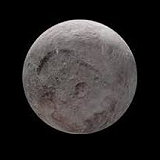
Eris is a fascinating celestial object in our Solar System and one of the largest known dwarf planets. It's about the same size as Pluto, but it's three times farther from the Sun. It is discovered by a team led by Mike Brown in 2005. It is located in the Kuiper Belt, a region beyond Neptune populated with icy bodies and dwarf planets.
The Malay Archipelago also called Insulindia or the Indo-Australian Archipelago is the archipelago between Mainland Southeast Asia and Australia. Situated between the Indian and Pacific oceans, the archipelago of over 25,000 islands and islets is the largest archipelago by area and fifth by number of islands in the world.
Nile River, the longest river in the world, called the father of African rivers. It rises south of the Equator and flows northward through northeastern Africa to drain into the Mediterranean Sea. It has a length of about 4,132 miles (6,650 kilometres) and drains an area estimated at 1,293,000 square miles (3,349,000 square kilometres).
The Elbe River is one of the major rivers of Central Europe. It rises in the Giant Mountains of the northern Czech Republic before traversing much of Bohemia, then Germany and flowing into the North Sea at Cuxhaven, 110 kilometres (68 miles) northwest of Hamburg. Its total length is 1,094 km (680 mi). The Elbe's major tributaries include the rivers Vltava, Saale, Havel, Mulde, Schwarze Elster, and Ohře.
The Hindu Kush is a significant mountain range in Central and South Asia, extending approximately 800 kilometers (500 miles) through Afghanistan and into northern Pakistan. Tirich Mir in Pakistan, which stands at 7,708 meters (25,289 feet), is the highest peak of the range. The range features rugged terrain with deep valleys and high, snow-covered peaks, making it a formidable barrier.
The Indian Ocean is the third-largest of the world's five oceanic divisions, covering 70,560,000 km2 (27,240,000 sq mi) or approx. 20% of the water on Earth's surface. It is bounded by Asia to the north, Africa to the west and Australia to the east. To the south it is bounded by the Southern Ocean, or Antarctica
Located between Alaska and Russia, the Bering Strait is the only marine gateway between the icy Arctic and the Pacific Ocean. At its narrowest point, the strait is only 55 miles wide. The Bering Strait may be narrow, but it’s teeming with wildlife—beluga whales, bowhead whales, gray whales, walruses, polar bears, ringed and ribbon seals.
Mount Elgon is an extinct shield volcano on the border of Uganda and Kenya, north of Kisumu and west of Kitale. The mountain's highest point, named "Wagagai", is located entirely within Uganda. Mt Elgon was once Africa’s highest mountain, far exceeding Kilimanjaro’s current 5,895m. Millennia of erosion have reduced its height to 4,321m, relegating it to the 4th highest peak in East Africa and 8th on the continent.
The Great Sand Sea is an expansive region of sand dunes and desert located in the Sahara Desert, spanning the border between western Egypt and eastern Libya. The Great Sand Sea covers an area of approximately 72,000 square kilometers, stretching from the Siwa Oasis in Egypt to the Calanshio Sand Sea in Libya.
Mount Cho Oyu is the world’s sixth highest mountain. This is the westernmost major peak in the Khumbu Sub region along the Mahalangur range. Cho Oyu stands on the border between Nepal and China. The peak lies in the Mahalangur sub range of the Nepal Himalayas. It elevates to a height of 8,201 m or 26,906 feet.
Scandinavia refers to the cultural and geographical region in Northern Europe that includes the countries of Norway, Sweden, and Denmark. Geographically, it's characterized by its northern location, with vast forests, rugged coastlines, fjords, and a relatively cold climate.
The Arctic Ocean is the smallest and shallowest of the world's five oceans, covering an area of about 14 million square kilometers (5.4 million square miles) at the North Pole. It is surrounded by the northern coastlines of North America, Europe, and Asia. The Arctic Ocean is unique for its ice cover, which varies significantly with the seasons, expanding in the winter and shrinking in the summer.
The Black Sea is an inland sea located between southeastern Europe and Asia Minor (modern-day Turkey). It is bounded by six countries: Bulgaria, Romania, Ukraine, Russia, Georgia, and Turkey. The Black Sea is connected to the Mediterranean Sea through the Bosporus Strait and the Sea of Marmara.