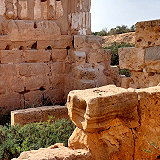
The Sabratha Museum displays artifacts unearthed from the archaeological site, including sculptures, mosaics, pottery, and other relics from the Greco-Roman period. The museum's collection includes Roman mosaics depicting mythological scenes, statues and busts of Roman and local figures, and objects from the daily life and religious activities of the ancient city.
The ancient city of Sabratha, located in present-day Sabratah, Libya, was one of the major cities of the Roman province of Tripolitania. Founded by the Phoenicians in the 5th century BC, Sabratha became an important trading center, particularly for the exchange of goods between the Mediterranean and inland Africa.
The ancient Sabratha Theatre is one of the most outstanding and best-preserved Roman architectural monuments in North Africa. Located in the ancient city of Sabratha, Libya, in the Roman province of Tripolitania, the theatre dates from the 2nd century AD, during the reign of Emperor Septimius Severus, who was born in nearby Leptis Magna.
Sabratah, in Libya's Zawiya district, is the westernmost of the ancient "three cities" of Roman Tripolis, along with Oea and Leptis Magna. From 2001 to 2007, it was the capital of the former Sabratha wa Sorman district. It lies on the Mediterranean coast, approximately 70 km (43 mi) west of modern Tripoli.