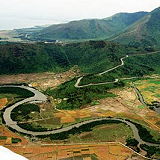
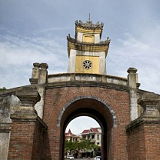
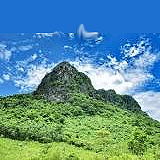
Quang Tri is a province in the central region of Vietnam. Its main city is Dong Ha. It is known for its scenic landscapes, historic landmarks, and vibrant culture. Some popular attractions in Quang Tri include the ancient citadel of Quang Tri, the Ben Hai River, and the Vinh Moc Tunnels. It had a population of 701,375 in 2021. Additionally, Quang Tri is home to delicious Vietnamese cuisine, friendly locals, and plenty of outdoor activities such as hiking, swimming, boating, and more.
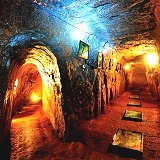
Địa đạo Vịnh Mốc is one of 114 large and small tunnels dug throughout Vinh Linh district, Quang Tri province. These 114 tunnels have a total length of nearly 42km. The Vinh Moc tunnel system was built in about 2 years, from 1965 to 1967. This is an underground tunnel system, including 3 main basements connected together to form a continuous system with a total length of more than 2,000m.
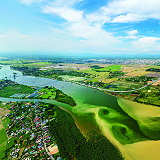
The Thạch Hãn River (Sông Thạch Hãn) is a river in Quảng Trị province, Vietnam. It rises in the Annamite Mountains, and enters the East Sea of Đông Hà. It is approximately 270 kilometres (170 mi) long, with two main tributaries and with several branches to the sea.
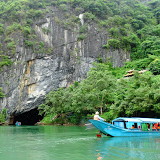
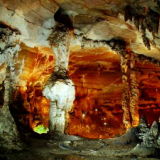
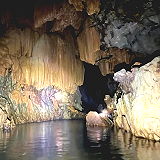
Hang Thủy Cung in Bố Trạch, Quảng Bình, Vietnam, is a spectacular cave located in the middle of Sinh Tồn Valley within Phong Nha – Kẻ Bàng National Park. It is also known as the "Aquarium Cave" due to its crystal-clear blue water resembling an underwater palace. The cave features stunning multicolored stalactites and stalagmites and creates a mythical, labyrinth-like aquatic landscape.
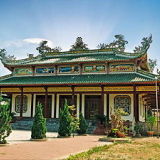
Chùa Sắc Tứ Tịnh Quang is a pagoda located on a mountainous area southwest of Ai Tu village, Trieu Phong district, Quang Tri province. This is the only ancestral temple in Quang Tri province that belongs to the Northern Buddhist sect, the spiritual symbol of Quang Tri Buddhism.
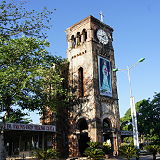
Thánh Địa Đức Mẹ La Vang (Pilgrimage Center of Our Lady of La Vang) is a famous Catholic pilgrimage site located near the ancestral temple of La Vang, which was a sanctuary for Christian refugees during the 17th century after various waves of persecution against Christians occurred in Vietnam, during a period known as the Trinh-Nguyen War.
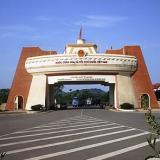
Cửa khẩu quốc tế Lao Bảo (Lao Bao Border Check Point) is an international border crossing located in Quang Tri Province, Vietnam. It serves as a major crossing point between Vietnam and Laos, specifically connecting Vietnam's Quang Tri Province with Laos' Savannakhet Province. The border crossing plays a crucial role in facilitating trade, travel, and transportation between the two countries.
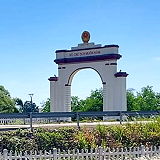
Cầu Hiền Lương Vĩ Tuyến 17 is located in Gio Linh District, Quang Tri Province, Vietnam. This site is historically significant as it is associated with the Vietnam War (1955-1975). The Hien Luong Bridge itself was an important crossing point over the Ben Hai River, which served as the demarcation line between North and South Vietnam during the war.
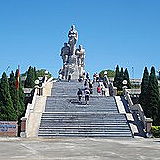
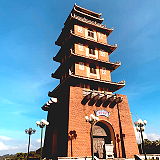
Bảo Tháp Khe Sanh (Khe Sanh Stupa) is a historical or cultural site located in Khe Sanh, Huong Hoa, Quang Tri, Vietnam. The stupa consists of 7 floors, 26m high, total floor area585m2, located in the Martyrs Cemetery area of Huong Hoa district.
Ngang Pass (Đèo Ngang), also known as the "Horse Neck Pass," is a mountain pass located in the Quang Trach district of Quang Binh Province, Vietnam. The pass runs along the Ho Chi Minh Highway and offers stunning views of the surrounding mountains and valleys.
Đền Bà Chúa Liễu Hạnh is a popular pilgrimage site located in Quang Dong village, Quang Trach district, Quang Binh province, Vietnam. The temple is dedicated to Ba Chua Lieu Hanh, a goddess of the sea and fertility who is revered in Vietnamese folk religion.
Phong Nha Cave (Động Phong Nha) is a UNESCO World Heritage Site located in the Phong NHA-Ke Bang National Park in Bo Trach district, Quang Binh province, Vietnam. The cave is a popular tourist destination known for its stunning natural beauty and unique geological formations.
Phong Nha-Ke Bang National Park (Vuon quoc gia Phong Nha-Ke Bang) is a UNESCO World Heritage Site located in Quang Binh Province, Vietnam. The park covers an area of over 850 square kilometers and is home to a vast network of caves, including the world's largest cave, Hang Son Doong.
Hang Sơn Nữ (Son Nu cave) has just been discovered in Truong Son commune, Quang Ninh district, Quang Binh. The new cave is more than 1.5 km long in the middle of Truong Son forest. During the summer, the water in the cave is not high, people can row boats from the entrance of the cave to the end of the cave approximately an hour.
Km 16 Đường Hồ Chí Minh, Nhánh Tây, Bố Trạch, Quảng Bình
609 views 💖 5
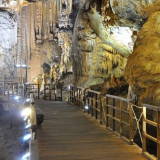
Paradise Cave, also known as Thien Duong Cave (Động Thiên Đường), is a stunning natural wonder located in the Bo Trach district of Quang Binh province, Vietnam. The cave system stretches for over 31 kilometers and is one of the longest dry caves in Asia.
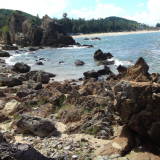
Dancing Rock Beach (Bai Da Nhay) is a beautiful and secluded beach located in Thanh Trach, Bo Trach district, in the province of Quang Binh, Vietnam. The beach is known for its stunning natural scenery, crystal-clear water, and unique rock formations.
Hang Son Doong, also known as Son Doong Cave, is the world's largest known cave located in Tan Trach commune, Bo Trach district, Quang Binh province, Vietnam. Discovered in 1991 by a local man, the cave was first explored by a team of British cavers in 2009. It has since become a popular destination for adventurous tourists looking to explore its natural beauty.
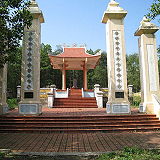
Nguyen Huu Canh Tomb (Lăng mộ Lễ thành hầu Nguyễn Hữu Cảnh) is located in Quang Binh Province, Vietnam. The tomb is a historical site and is named after Nguyen Huu Canh, a famous Vietnamese leader who lived during the 17th century. It's a popular tourist attraction in Quang Binh as it gives visitors a glimpse into the rich history of Vietnam.
The Dinh Bac Citadel (Định Bắc Trường Thành or Luỹ Thày) is a historic site located in the Quang Binh province of Vietnam. The citadel was built during the Nguyen Dynasty, and served as a military fortification to protect the region from invaders.
Nui Than Dinh, also known as Than Da Mountain, is a famous tourist attraction located in Quang Binh Province, Vietnam. The mountain is named after the legendary mountain god who, according to local folklore, once lived on the mountain and protected the local people.