Di tích Lịch sử Thành cổ Quảng Trị (Quang Tri Citadel) is an ancient fortress located in Quang Tri Province, central Vietnam. It was built in 1824 during the Nguyen Dynasty and served as a military stronghold to defend the Vietnamese border against invaders.
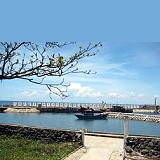
Con Co Island (Đảo Cồn Cỏ) is an island located in the Quang Tri Province of Vietnam. This island gained historical significance during the Vietnam War. Con Co was a strategic military outpost during the conflict, and it was also the site where the last American combat troops withdrew from Vietnam on March 29, 1973, marking the end of direct U.S. military involvement in the war.
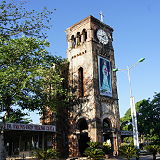
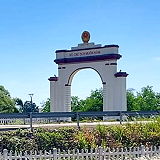
Thánh Địa Đức Mẹ La Vang (Pilgrimage Center of Our Lady of La Vang) is a famous Catholic pilgrimage site located near the ancestral temple of La Vang, which was a sanctuary for Christian refugees during the 17th century after various waves of persecution against Christians occurred in Vietnam, during a period known as the Trinh-Nguyen War.
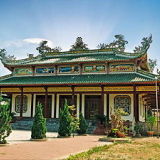
Chùa Sắc Tứ Tịnh Quang is a pagoda located on a mountainous area southwest of Ai Tu village, Trieu Phong district, Quang Tri province. This is the only ancestral temple in Quang Tri province that belongs to the Northern Buddhist sect, the spiritual symbol of Quang Tri Buddhism.
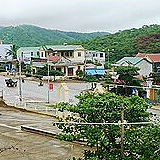
Quang Tri is a province in the central region of Vietnam. Its main city is Dong Ha. It is known for its scenic landscapes, historic landmarks, and vibrant culture. Some popular attractions in Quang Tri include the ancient citadel of Quang Tri, the Ben Hai River, and the Vinh Moc Tunnels. It had a population of 701,375 in 2021.
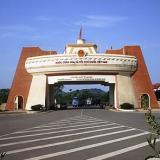
Cửa khẩu quốc tế Lao Bảo (Lao Bao Border Check Point) is an international border crossing located in Quang Tri Province, Vietnam. It serves as a major crossing point between Vietnam and Laos, specifically connecting Vietnam's Quang Tri Province with Laos' Savannakhet Province. The border crossing plays a crucial role in facilitating trade, travel, and transportation between the two countries.
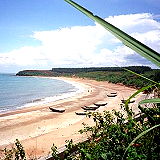
Bãi biển Cửa Tùng (Cua Tung Beach) is a beautiful beach located in Vinh Linh, the Quang Tri Province of Vietnam. It's part of the larger coastline along the East Sea. The beach is known for its scenic beauty, with white sandy shores, clear blue waters, and a tranquil atmosphere. The natural landscape, combined with the gentle waves, makes it an attractive destination for both locals and tourists.
Cầu Hiền Lương Vĩ Tuyến 17 is located in Gio Linh District, Quang Tri Province, Vietnam. This site is historically significant as it is associated with the Vietnam War (1955-1975). The Hien Luong Bridge itself was an important crossing point over the Ben Hai River, which served as the demarcation line between North and South Vietnam during the war.
Khe Sanh is a district in the Quang Tri Province of Vietnam. The district is particularly known for its historical significance during the Vietnam War. The Battle of Khe Sanh, which took place from January to July 1968, was one of the longest and deadliest battles of the war.
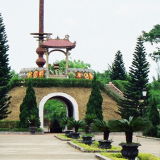
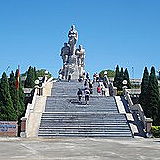
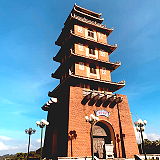
Bảo Tháp Khe Sanh (Khe Sanh Stupa) is a historical or cultural site located in Khe Sanh, Huong Hoa, Quang Tri, Vietnam. The stupa consists of 7 floors, 26m high, total floor area585m2, located in the Martyrs Cemetery area of Huong Hoa district.
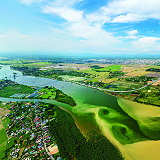
The Thạch Hãn River (Sông Thạch Hãn) is a river in Quảng Trị province, Vietnam. It rises in the Annamite Mountains, and enters the East Sea of Đông Hà. It is approximately 270 kilometres (170 mi) long, with two main tributaries and with several branches to the sea.
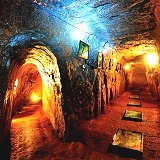
Địa đạo Vịnh Mốc is one of 114 large and small tunnels dug throughout Vinh Linh district, Quang Tri province. These 114 tunnels have a total length of nearly 42km. The Vinh Moc tunnel system was built in about 2 years, from 1965 to 1967. This is an underground tunnel system, including 3 main basements connected together to form a continuous system with a total length of more than 2,000m.