|
Neptune Solar System Last Updated: 12/22/2024 |
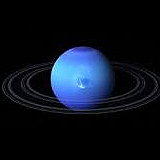
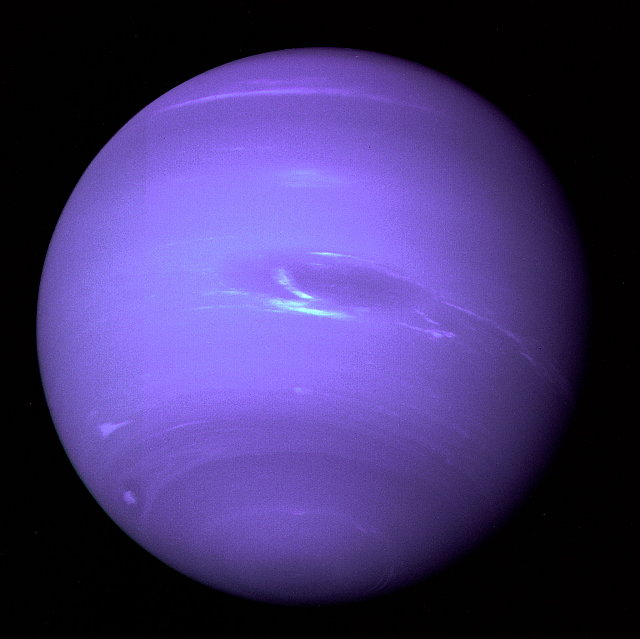
| Neptune is the eighth and farthest planet from the Sun in our solar system. It’s the fourth-largest, and the first planet discovered with math. The distance is about 4.5 billion kilometers ~2.8 billion miles on average from the Sun. Diameter is approximately 49,244 kilometers ~30,598 miles. The orbit period is 164.8 Earth years and day length is about 16 hours. | |
| - Primary composition includes hydrogen, helium, and methane. The color is deep blue due to methane absorbing red light and scattering blue The weather is extremely dynamic, with the fastest winds in the solar system reaching up to 2,100 kilometers per hour ~1,300 mph. - It has 14 known moons, the largest being Triton, which is geologically active and has geysers of nitrogen. The rings are faint and composed of dust and ice particles. - Voyager 2 is the only spacecraft to visit Neptune, in 1989. | |
Website Wikipedia
World » Wrd
Place » Space
|
Milky Way Place » Space The Milky Way is the galaxy that contains our solar system. It's a barred spiral galaxy, meaning it has a central bar-shaped structure composed of stars. The Milky Way spans about 100,000–200,000 light-years in diameter. It contains approximately 100–400 billion stars. Its mass is estimated to be about 1.5 trillion times the mass of the Sun, most of which is dark matter. 145 views 💖 1 👍 0Universe |
|
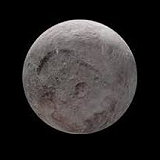
Ceres Place » Space Dwarf planet Ceres is the largest object in the asteroid belt between Mars and Jupiter. It is the only dwarf planet in the inner solar system. It was the first member of the asteroid belt to be discovered when Giuseppe Piazzi spotted it in 1801. When NASA's Dawn arrived in 2015, Ceres became the first dwarf planet to receive a visit from a spacecraft. 143 views 💖 1 👍 0Universe |
|
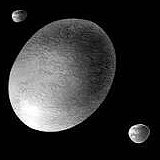
Eris Place » Space Eris is a fascinating celestial object in our Solar System and one of the largest known dwarf planets. It's about the same size as Pluto, but it's three times farther from the Sun. It is discovered by a team led by Mike Brown in 2005. It is located in the Kuiper Belt, a region beyond Neptune populated with icy bodies and dwarf planets. 145 views 💖 1 👍 0Universe |
|
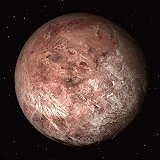
Haumea Place » Space Haumea is not a planet but a dwarf planet located in the Kuiper Belt, a region beyond Neptune filled with icy bodies and remnants from the Solar System's formation. Haumea has an elongated, ellipsoidal shape, likely due to its rapid rotation. It measures approximately 2,322 km by 1,704 km by 1,138 km, making it one of the largest known objects in the Kuiper Belt. 133 views 💖 1 👍 0Universe |
|
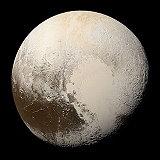
Makemake Place » Space Dwarf planet Makemake – along with Pluto, Haumea, and Eris – is located in the Kuiper Belt, a donut-shaped region of icy bodies beyond the orbit of Neptune. Makemake is slightly smaller than Pluto, and is the second-brightest object in the Kuiper Belt as seen from Earth while Pluto is the brightest. It takes about 305 Earth years for this dwarf planet to make one trip around the Sun. 137 views 💖 1 👍 0Universe |
|
Pluto Place » Space Pluto was once our solar system's ninth planet, but has been reclassified as a dwarf planet. It's located in a distant region of our solar system beyond Neptune known as the Kuiper Belt. Its diameter is about 2,377 kilometers (1,477 miles), smaller than Earth's Moon. Orbit is highly elliptical and inclined, taking 248 Earth years to complete one orbit around the Sun. Sometimes it is closer to the Sun than Neptune. 125 views 💖 1 👍 0Solar System |
|
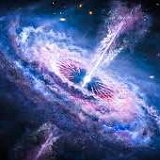
Universe Place » City The universe is all of space and time and their contents. It comprises all of existence, any fundamental interaction, physical process and physical constant, and therefore all forms of matter and energy, and the structures they form, from sub-atomic particles to entire galactic filaments. 203 views 💖 1 👍 0Universe |
|
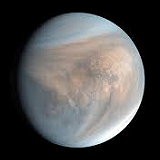
Venus Place » Space Venus is the second planet from the Sun, and the sixth largest planet. It’s the hottest planet in our solar system. It is often called Earth's "sister planet" due to its similar size, mass, and proximity. Early Soviet Venera missions successfully landed on Venus and sent back surface images and data and NASA's Magellan orbiter mapped the surface in the 1990s using radar imaging. 111 views 💖 1 👍 0Solar System |
|
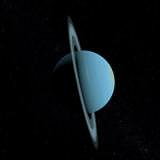
Uranus Place » Space Uranus is the seventh planet from the Sun in our Solar System and is known as an ice giant because it's made of water, ammonia, and methane. It's the third-largest planet by diameter ~50,724 km or 31,518 miles, about four times wider than Earth and the fourth-largest by mass. 126 views 💖 1 👍 0Solar System |
|
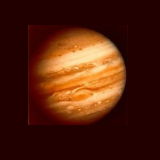
Jupiter Place » Space Jupiter is the largest planet in the solar system and the fifth planet from the sun. The gas giant has a long, rich, history of surprising scientists. Jupiter has 79 moons and is known as the 'king of the planets'. Jupiter orbits the Sun at a distance of 5.20 AU (778.5 Gm) with an orbital period of 11.86 years. 146 views 💖 1 👍 0Jupiter |