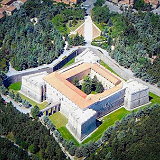
Forte Spagnolo Castle is a Renaissance castle in L'Aquila, central Italy. In 1527, the town was divided between the Kingdom of Spain and the Kingdom of France. Because the town chose France, the Spanish decided to suppress the inhabitants by building a military fortress in 1532.
The Doge's Palace is a Venetian Gothic-style palace and one of the main landmarks of Venice in northern Italy. Once the seat of government and residence of the Doge, this Gothic masterpiece is a blend of art, politics, and history. Stroll through its opulent rooms, cross the Bridge of Sighs, and admire paintings by Titian and Tintoretto.
Via Vittorio Emanuele II, Snc, 11020 Bard AO, Italy
37 views 💖 1 👍 0
The Bard Fortress is a complex of fortifications built in the 19th century by the Savoy dynasty on a rocky outcrop above Bard, a town and municipality in the Aosta Valley of northwestern Italy. The fortress stands prominently among the steep slopes of the Bard Gorge on a rugged rocky hill and comprises four main blocks, situated at varying elevations between 400 and 467 meters above sea level.
Area Archeologica di Segesta, Acropoli Nord, 91013 Calatafimi TP, Italy
30 views 💖 1 👍 0
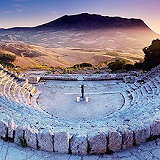
The theater in Segesta (now Calatafimi, Sicily, Italy) is one of the best-preserved examples of ancient theater architecture in Italy. The auditorium width is 63 m with 29 rows of seats facing North-Northeast [21 of the lower rows still exist] divided horizontally into seven wedge-shaped sections, the upper row having continuous stone backrests. The orchestra area width is 14.80 m.
Fénis Castle is one of the most iconic and best-preserved medieval castles in the Aosta Valley of the northwestern Italian Alps. Located in the small town of Fénis, about 13 km east of the regional capital of Aosta, the castle sits atop a gentle hill rather than a more fortified rocky outcrop.
Via della Salara Vecchia, 5/6, 00186 Roma RM, Italy
40 views 💖 1 👍 0
Built in the latter half of the first century AD, the Domitian Royal Ramp was a vast underground passageway connecting the Roman Forum, the city's political and administrative center, with the center of power, the Imperial Palace. Essentially, it was the path leading up to the emperor's residence.
92100 Agrigento, Free municipal consortium of Agrigento, Italy
47 views 💖 1 👍 0
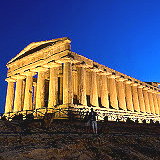
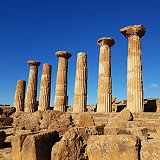
Built around 430 BC, the Temple of Concordia is an ancient Greek temple of Magna Graecia, located in the Valley of the Temples in Agrigento, on the southern coast of Sicily, Italy. It is the largest and best-preserved Doric temple in Sicily and one of the best-preserved Greek temples overall, particularly in the Doric style. It is located one kilometer east of the Temple of Heracles.
Largo Marguerite Yourcenar, 1, 00010 Tivoli RM, Italy
67 views 💖 1 👍 0
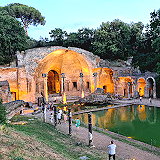
Nestled in the lush green landscape of Latium, a few kilometers from Rome, lies Villa Adriana, one of Italy's best-preserved and most visited archaeological sites. Built between 118 and 138 AD by Emperor Hadrian, Villa Adriana and its grounds span nearly 300 acres of verdant countryside near Tivoli.
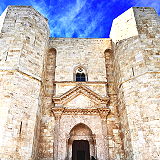
Castel del Monte is a unique and iconic medieval castle located in the Apulia region of southeastern Italy. It stands as a remarkable example of medieval architecture, and its unique design and historical mysteries make it a fascinating destination for travelers and historians alike.
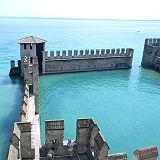
Scaligero Castle, also known as Castello Scaligero, is a historic fortress located in Sirmione, a picturesque town on the southern shore of Lake Garda in northern Italy. The castle is strategically positioned at the entrance to the harbor, providing both protection and control over the waterways.
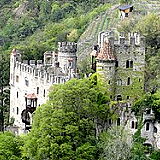
Brunnenburg Castle is located in South Tyrol, which is a region in northern Italy. Specifically, Brunnenburg Castle is in the village of Dorf Tirol or Tirolo, near the town of Merano. The castle has a rich history and is known for its medieval architecture and picturesque setting in the Italian Alps.
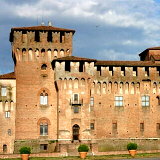
The Castello di San Giorgio is part of the Ducal palace of Mantua. It is a moated rectangular castle, each of which's four corners has a large tower and the moat is crossed by three drawbridges. This moat is part of the network of canals and lakes that surround Mantua and give the city its special character.
Narni Sotterranea is a fascinating underground complex located in Narni, a historic town in the province of Terni, Italy. It is renowned for its extensive network of tunnels, chapels, and ancient structures, revealing the city's rich history and architectural prowess.
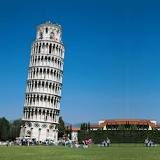
The Leaning Tower of Pisa, or simply, the Tower of Pisa, is the campanile, or freestanding bell tower, of Pisa Cathedral. It is known for its nearly four-degree lean, the result of an unstable foundation. The tower is one of three structures in the Pisa's Cathedral Square (Piazza del Duomo), which includes the cathedral and Pisa Baptistry.
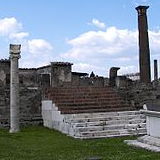
The Temple of Apollo, also known as the Sanctuary of Apollo, is a Roman temple built in 120 BC and dedicated to the Greek and Roman god Apollo in the ancient Roman town of Pompeii, southern Italy. The sanctuary was a public space influenced by Roman colonists to be dedicated to Greco-Roman religion and culture.
Piazza dei Miracoli, Piazza del Duomo, 56010 Pisa, Italy
606 views 💖 5 👍 0
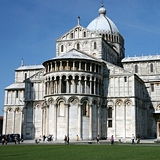
Begun in 1093, Pisa Cathedral (Duomo di Pisa) is a masterpiece of Romanesque architecture. Despite its proximity to the eye-catching and tourist-attracting Leaning Tower, the Duomo still dominates the monumental Piazza dei Miracoli in Pisa.
These two towers are often considered symbols of Bologna and are located in the city center, at the point where the ancient Via Emilia (Aemilian Road) enters the city. They were built during the Middle Ages and served military functions (signaling and defense), while their magnificence also reflected the social prestige of the family that commissioned their construction.
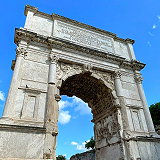
The magnificent triumphal arch on the Via Sacra, Rome, dedicated to Emperor Titus, was built in the years following his death in 81 AD. This structure commemorates his victory at the Battle of Bellum Iudaicum in 70 AD, the capture of Jerusalem, and the incorporation of Judaea into the Roman Empire.
92100 Agrigento, Free municipal consortium of Agrigento, Italy
84 views 💖 1 👍 0
The Valley of the Temples is an archaeological site in Agrigento, Sicily. It is one of the most outstanding examples of ancient Greek art and architecture of Magna Graecia, and is one of Sicily's major tourist attractions. The Valley of the Temples includes temples of the gods, as well as the necropolis area and the extra-moenia sanctuaries.
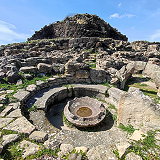
Su Nuraxi is a Nuragic archaeological site located in the wildest heart of Sardinia, at the foot of the Giara di Gesturi plateau. It is one of the many all-Italian gems. Here stands one of the most famous defensive complexes of the Bronze and Iron Age, the Nuraghe settlement of Barumini known as Su Nuraxi.